


As these conditions become more consistent, adapting within existing systems is no longer always enough.
For some producers, the question shifts from how to respond — to how to redesign.
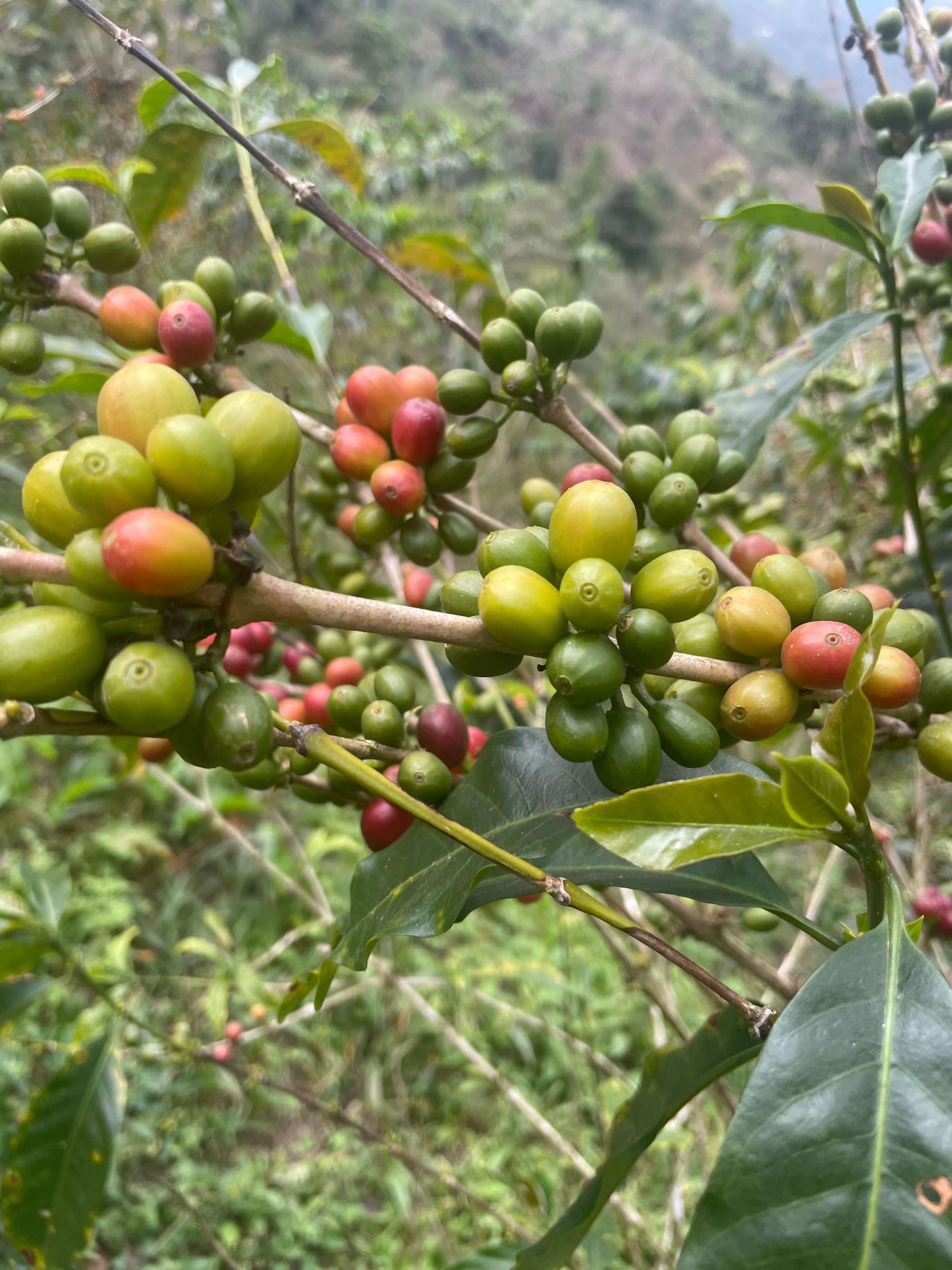
Neblina Estate, established in 2023 in San José de Lourdes by David Flores, represents one of these approaches.
The project began with a clear signal from the market. Many of his customers were seeking coffees processed entirely by the producer — full traceability, no shared infrastructure, direct control from cherry to dried parchment.
Rather than adapting existing production to meet that demand, the decision was made to start again: at higher elevation, with new parameters, and complete ownership over the process.
At Neblina, varietals such as Sidra, Geisha, Bourbon, Arara, Marshell and Caturra have been planted. The farm combines modified planting density with traditional agronomic practices and operates without glyphosate.
At this altitude, coffee develops more slowly. Lower temperatures extend maturation, increasing density and complexity — but also raising the demands of farm management. Nutritional balance, spacing and timing all become more critical. The margin for error narrows.
The economics are direct.
“Coffee farming in highland areas is not just about production,” David says. “It’s about meticulous technical management and immense resilience. The agronomic costs are high and often not sufficiently recognised.”
His goal is equally clear: to achieve prices that reflect that level of investment, working with buyers who value both quality and exclusivity.
“I can’t say anything has been successful yet,” he says. “This is just the beginning.”
The investment is high. The margins are uncertain. The outcome remains unproven.
Neblina represents one kind of redesign — starting from scratch with a clear vision and the resources to pursue it. But across Peru, most producers don't have that option. For them, innovation looks different. It is not a choice made from strength, but a response made under constraint. What emerges from that pressure is often just as significant — and considerably less visible.
→ Visiting Peru: What Roasters Found at Origin