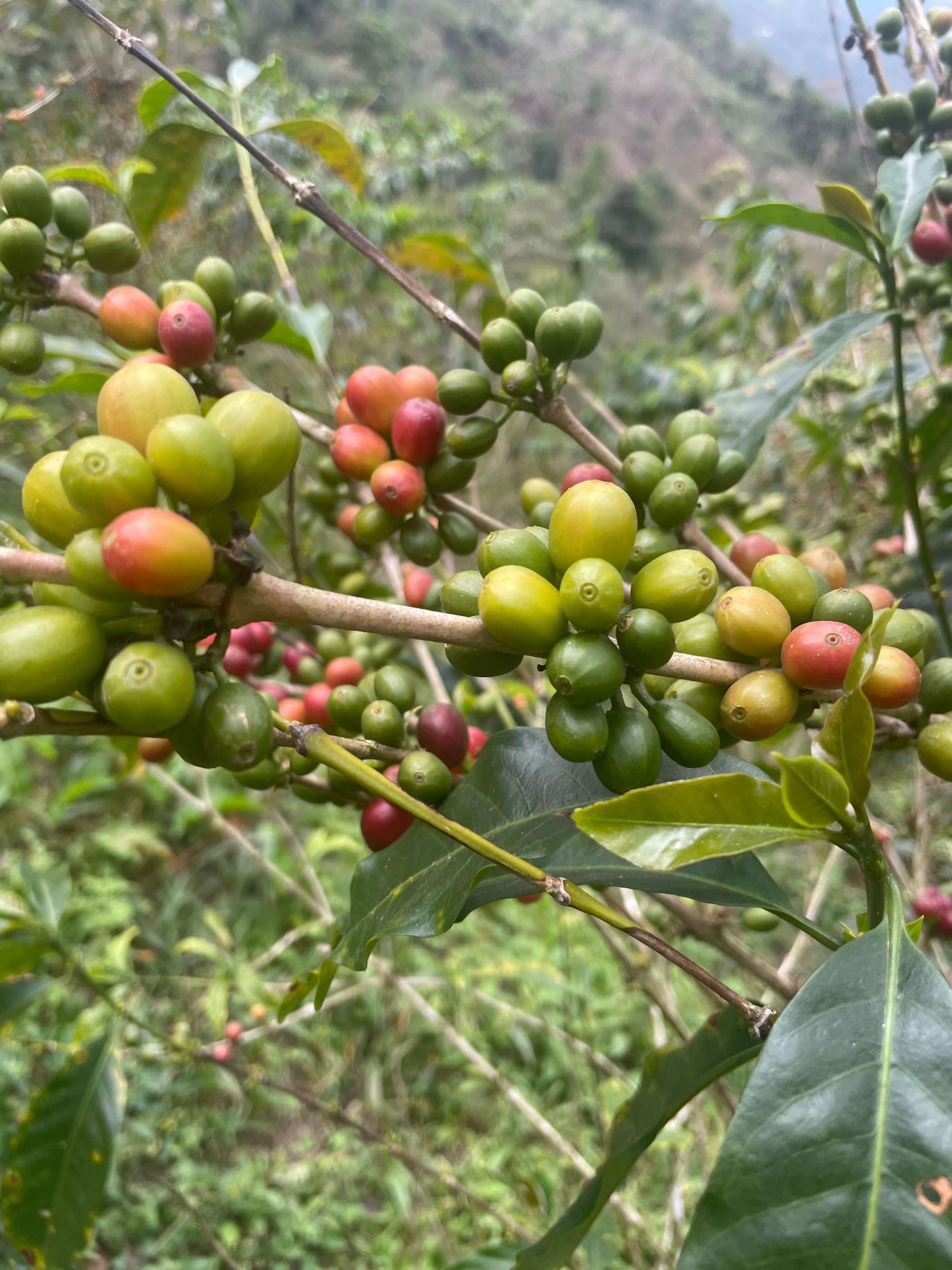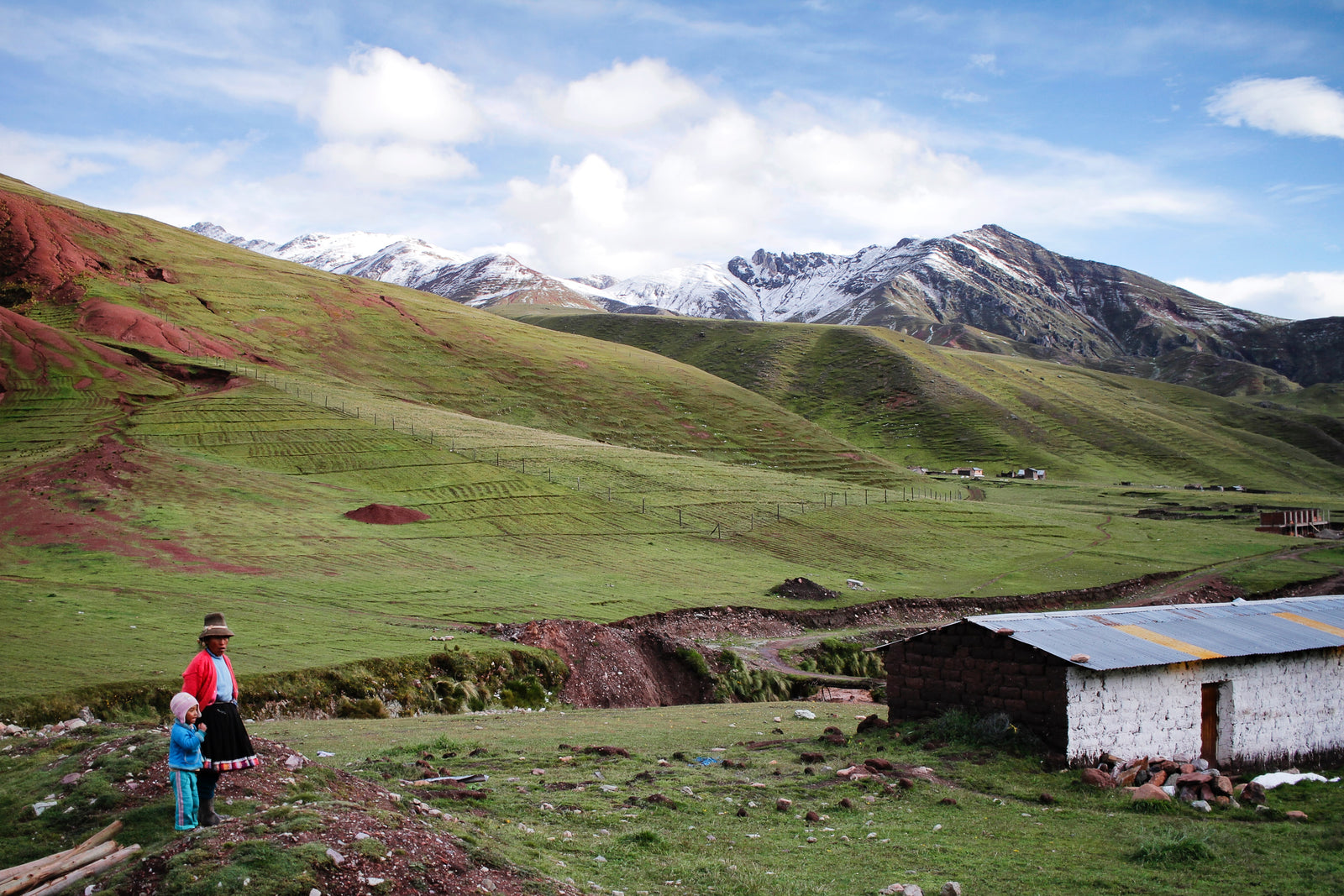



Peru is not one profile — it is a system of roles.
FOUNDATION — Anchors of the Menu
Four coffees. Three regions. The coffees that come back every year.
Llave de Oro's Red Caturra, grown by Andrés Bazo at 1,600 metres in Sanchiro Palomar, Chanchamayo — fourth harvest with Khipu, the most competitive-volume coffee we source. A near-Brazilian profile, built for single-origin espresso.

Finca Artemira's Washed Catuai and Caturra, a classic Cajamarca microlot from the hills above San José de Lourdes — clean, bright, easy drinking. A blend of two of the region's most established varietals, run through a tried-and-tested process.
Rogelio Peña's Washed Typica and Caturra from Finca La Familia, returning after a year's wait. The family had asked Khipu to hold off — the previous harvest wasn't, in their own judgement, ready. The relationship is older than the coffee.

And one exception to the washed rule: the Ramos García family's Yellow Honey Typica from Proyecto Otuzco in Huaranchal, La Libertad. A region barely on Peru's coffee map, a family experimenting with honey processing for eighteen months. At 2,069 metres it sits higher than any other Foundation coffee — quietly suggesting where La Libertad might go.
Scores between 84 and 86.5 — not the highest numbers in this list but the most returned to.
Profiles: chocolate, caramel, citrus, soft fruit.

CORE — Quality, Versatile
This is where Peru's range becomes visible.
Eleven coffees across four regions — Cajamarca, Amazonas, Pasco, Cusco — and a handful of varietals repeat across them, revealing how the same seed behaves under different conditions.
Marshell is the clearest example: two from Cajamarca (David Flores at Finca El Morito, and Finca Artemira's first-ever Marshell), and a third from Roiber Becerra at Finca Morales in Amazonas — the first Marshell Khipu has ever sourced from outside Cajamarca.

Processing widens. Washed still leads, but with black honey, anaerobic stages, double and extended fermentations layered in.
Three threads run through this tier.
Signature blends. Finca Artemira's Family Farm Lot — Bourbon, Catuai, and Caturra. What began as Khipu's first-ever offering has developed into one of our signatures; the Bourbon adds what we call "Kenyan-esque brightness" to the classic Peruvian sweetness of the Catuai and Caturra.

First-time relationships. Three Roiber Becerra coffees from Finca Morales, all debuts — Bourbon, Caturra, Marshell. A community lot from Procecam in Lonya Grande, assembled by Marcos Herrera from his neighbours as a larger-volume offering built on existing trust. David Flores's Bourbon from Finca El Morito — first time sourcing the varietal from a farm we have worked with for three harvests.

New varietals in new places. Finca Artemira's first Washed Tabi — a varietal rare in Peru. Yesica Llanqui's Caturra from AYNI in Cusco, grown at 2,150 metres — higher than most of her neighbours in Huaynopata, and from an association still in its second year of sourcing with Khipu.
Scores cluster tightly around 86 and 87 SCA.
Profiles: red fruit, stone fruit, citrus, honeyed sweetness.

EXPERIMENTAL — Risk, Contained
Where the processing becomes the subject.
Six coffees. All naturals.

The fermentations get longer. Seventy-two hours in cherry for Marcos Herrera's Natural Bourbon and SL28 at Mamaruntu. One hundred and twenty hours frozen in cherry for Gregorio Espinoza's Cold Maceration Red Catuai from Finca Voller in Pozuzo. Two hundred and forty hours anaerobic for Gilder Tantalean's Natural Bourbon from Casharpitas in San Martín — in our own words, "the most process-heavy we source."

The varietals get rarer. Hilario Ccoyo's Natural Java from AYNI in Cusco — Khipu's first Java, unusual for the region and the country. Marcos Herrera's Natural SL28 — a varietal so uncommon in Peru that Khipu waited a year and a harvest to get it; only a few kilos were available in 2024, and we were promised more in 2025. Faustino Flores returns with his Natural Marshell from Finca El Morito — a second-year sourcing, well received the first time.
The geography is the widest of any tier. San Martín, Cusco, Pasco, Amazonas, plus El Morito back in Cajamarca. This is where Peru shows its edges.
Khipu's own notes hedge honestly. Punchy. Acquired taste. Border-line process-heavy. These are not coffees for every roaster. They are coffees for a particular moment on a menu — a seasonal feature, a retail highlight, a single-origin conversation piece.
Scores between 86.5 and 87.5 — a tight range for fine margins.
Profiles: tropical, berry-forward, occasionally wine-like but clean.

SHOWCASE — Peru at Full Resolution
Geisha lives here, and so does what isn't quite Geisha.
Twelve coffees — and seven are Geisha, across four farms in three regions. Ebert Huaman from Finca Artemira has three of them. The classic Washed La Palma Lot, which, as Khipu puts it, "stands out on the cupping table every year without fail" — their favourite Geisha from Cajamarca. And two lots from a new experiment: the Kiko Lot, grown from seeds Ebert sourced in 2022 from Franco Huaches, the #2 Cup of Excellence winner in 2023. Same seed, two processes — one washed, one natural.

Marcos Herrera's Natural Geisha from Finca Mamaruntu was #14 in the 2024 Cup of Excellence. This year he chose not to submit, which meant more of it was available to Khipu.
Roiber Becerra returns with his Natural Geisha from Finca Morales — third year of sourcing, the profile shifting each harvest between floral and sweet. Winkler Tapia's Natural Geisha from Finca Los Orquedias in Lonya Grande returns too — floral this year, a touch creamier. Manuel Rosendo Marlo Baca's Washed Geisha Green Tip from Finca Pacpa arrives for the first time.
And then the coffee the guide has been building toward: Saulo and Ronald Ibias Casa's Washed SL09 — Inca Geisha — from Tres Cedros in Inkawasi, Cusco. Scored 90. The highest number in the offer list. The most expensive lot. The varietal giving Peru its moment.

Around the Geishas, four other coffees set the context. David Flores's Washed Sidra from Finca El Morito — his first harvest, a varietal Khipu first asked about in 2022 before David had even planted it. Finca Artemira's Washed Pink Bourbon, returning after Ebert's extensive fermentation work finally expressed the varietal at full potential.
Manuel Marlo Baca's Washed Pacamara — light florals, bursting with juice. Luisa Zamalloa's Washed Bourbon from AYNI in Cusco, offered in place of her Geisha after she chose to submit that lot to the Cup of Excellence.
Scores between 87 and 90 — the top of Peru's range, almost entirely nanolots.
Profiles: florality, layered sweetness, tea-like structure.
The 26/27 harvest season is already approaching. Many of the producers in this guide are preparing now — and availability on these lots is limited. If something in this list caught your attention, the best time to talk is before it closes.