


Judith's journey to Vista Alegre was not a single departure and return.
There were several.
She left Cutervo as a child when her parents moved the family to Lima — the same quiet calculation many families made: education, opportunity, a different future.
Then life took her further still.
She married. She was widowed. She emigrated to Spain, seeking stability for her children in a country that was not hers.
For years, Vista Alegre existed as family land often does during those chapters — as memory, as history, cared for at a distance.
When she eventually returned to Cutervo, she saw what absence had done.

Without a constant presence, the land had become vulnerable — particularly to illegal occupation. In rural Peru, unclaimed land is not simply neglected. It invites encroachment. Legal protections are thin. The risks are real.
Doing nothing, she realised, was the greatest risk of all.
"The greatest risk would have been doing nothing."
Coffee became the way to bring the farm back to life.
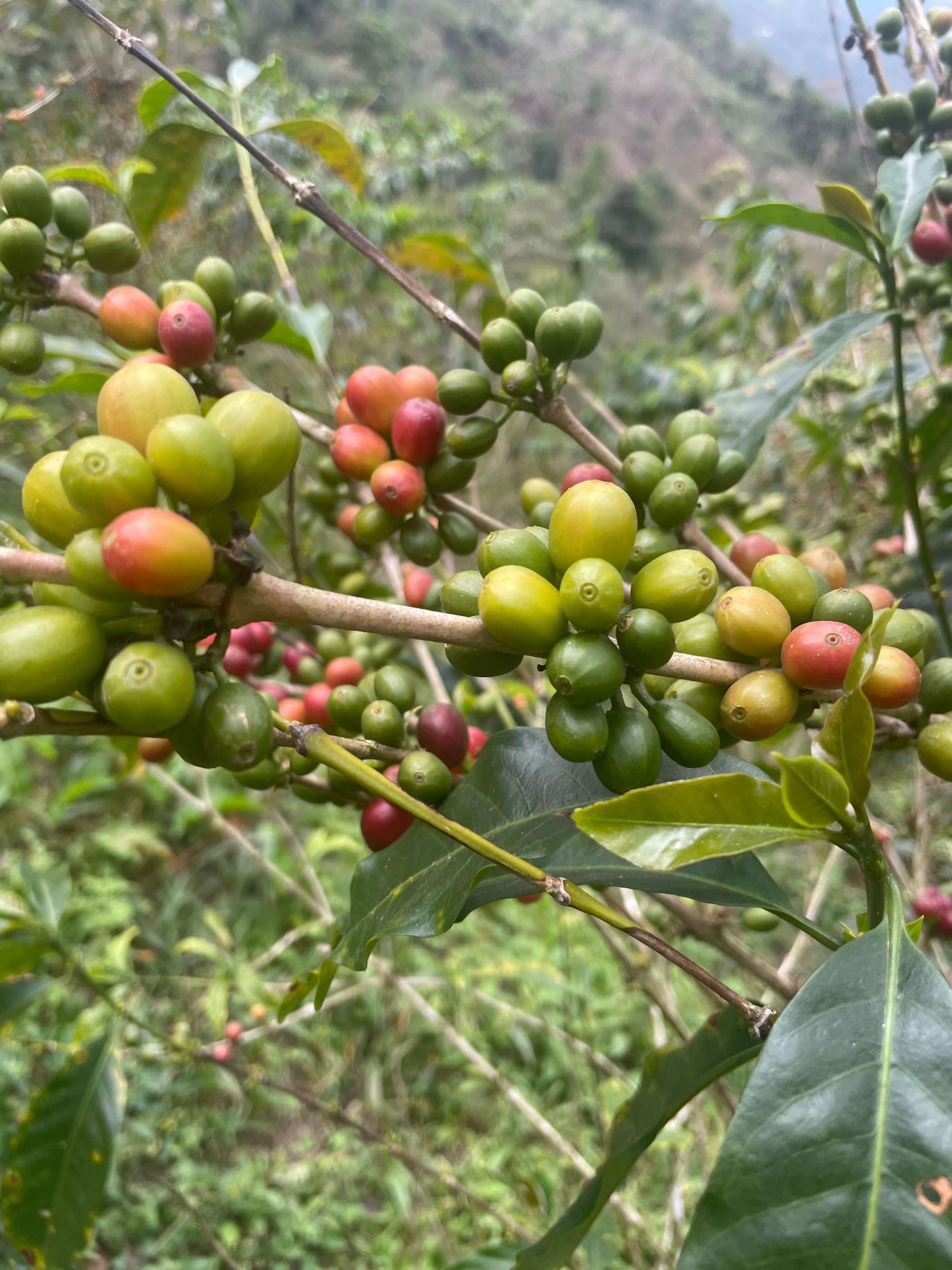
The property lies in Cutervo, in the Cajamarca region — long associated with coffee cultivation. Her parents acquired the land in 1969, growing coffee alongside livestock and subsistence crops typical of rural Andean life. In 2025, the first new trees were planted.
Judith is learning coffee farming from the beginning — soil management, crop cycles, the rhythms and demands of rural agriculture.
But the project is about more than production.
It is about rebuilding a relationship with the land.
"This coffee will represent a story of recovery, care and perseverance."
Across Peru, similar stories are emerging. The farm had never disappeared.
For Judith, neither did the reason to return.

Judith returned to land she had never farmed herself — starting from the beginning, learning the rhythms of a place her parents had cultivated before her. Andrés Bazo's story begins from a similar point of inheritance. But at Llave de Oro, the land never left the family. Three generations on, what's changed is not the farm — it's the understanding brought to it.
→ Read next: Rediscovering coffee with Andrés Bazo of Llave de Oro