


In recent harvests, experimentation in coffee is no longer driven by novelty alone. It is increasingly shaped by necessity.
Producers across multiple regions are facing growing instability in the production cycle. What were once relatively predictable patterns of flowering, ripening and drying have become less reliable, forcing many to adapt in real time.
At Mamaruntu, producer Marcos Herrera describes a season defined by extremes. From July 2024 to January 2025, the weather turned severe — a prolonged drought that forced him to expand the farm’s irrigation, in some areas carrying water plant by plant.
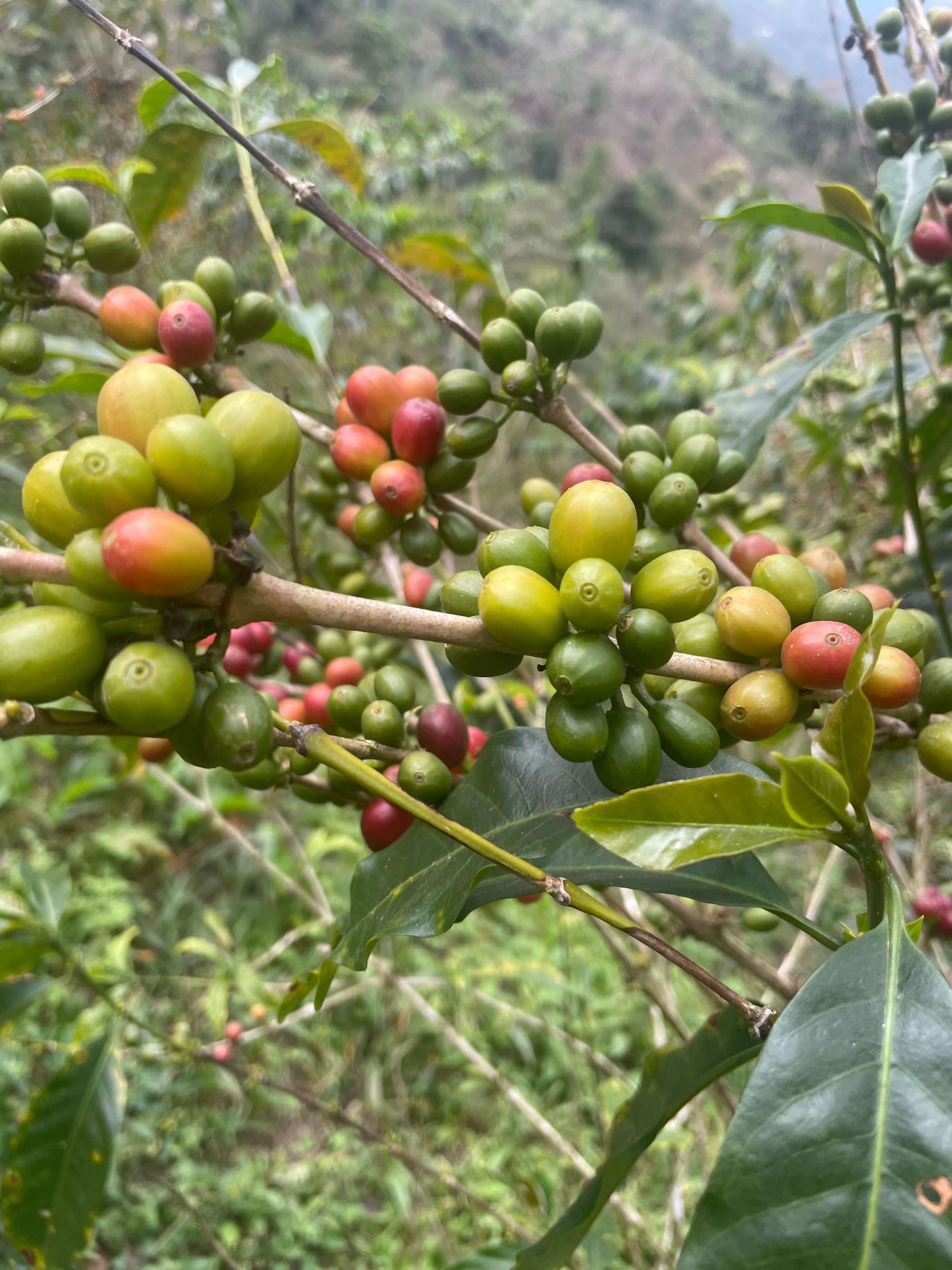
When the rains eventually arrived, they came abruptly — intense, irregular and often at the worst possible moment. Periods of strong sun were followed by heavy rainfall and sudden drops in temperature. Cherries split before reaching maturity or fell prematurely from the tree.
These conditions created an environment where pests and diseases spread quickly. Yellow rust arrived first, devastating leaves across entire plants and allowing anthracnose to take hold — moving upward through branches, fruit and trunk, in some cases leading to the slow death of plants that had taken years to establish.
The impact was not limited to yield. It reshaped the decisions Marcos was forced to make.
In heavily affected areas, cherries were sometimes harvested earlier than intended to prevent total loss. These lots — often lower in quality — were sold into secondary markets at reduced prices. A necessary compromise in a difficult season.
He managed it, as he always has, with family support alone. This was not an isolated season. Similar conditions were being reported across regions.
At Finca Voller, the sequence was similar. "A long summer followed, and then the rains came to ruin the harvest."
The sustained rainfall extended the picking window far beyond what was planned, driving up labour costs and reducing overall volume. Excess moisture caused cherries to burst and fall before they could be picked. The hardest defects to identify were the ones that arrived last.
"Sour grains," Gregorio Espinoza explains. "Because by the time you find them, the damage is already done." At Mamaruntu, Marcos Herrera had arrived at the same conclusion by a different route. "Sometimes you only realise it when it's already too late."
These conditions do not only affect yield — they shape the cup itself. Uneven ripening introduces inconsistencies in sweetness and structure. What appears on a cupping table as inconsistency is often the result of decisions made under pressure in the field.
These are no longer isolated events. They are becoming part of how coffee is produced. For producers, adaptation is no longer optional.
Marcos and Gregorio adapted within the conditions they had — managing what arrived, absorbing what couldn't be controlled. At Neblina Estate, the response to pressure took a different form. Rather than adapting to difficult conditions, the decision was made to move above them — starting again at higher altitude, where the environment itself becomes part of the strategy.
→ Read next: Starting again, higher, at Neblina Estate