


Through church networks and community workshops in areas like Villa El Salvador, she met women who had migrated from the Andes and jungle regions. Women rebuilding their lives on the desert edges of a city that hadn't asked for them.
Over time, those encounters became friendships — then something deeper.
The women she came to know were not subjects or case studies. They were colleagues, mentors, collaborators. Together they created a small jewellery social enterprise — later known as Hope Jewellery — providing dignified income in communities where formal employment was scarce.
The stories that eventually became Grit and Silver were shared slowly.
Over meals. During long bus rides across the city. In markets and workshops where conversations unfolded over years rather than interviews.
What she came to understand — as an outsider who had earned proximity — was something statistics alone could never show.
"The journey to the city was not simply about economic ambition. It was about survival."

A city without a plan
The waves of migration that reshaped Lima were closely connected to Peru's internal conflict.
Violence between the Maoist insurgent group Sendero Luminoso (Shining Path) and government forces destabilised large parts of the Andes. At the same time, economic collapse — and the failure of cooperatives across sectors, from cacao to coffee — stripped communities of the structures that had once sustained them.
Villages were destroyed. Families displaced. Entire regions became unsafe.
Peruvian cultural researcher and former coffee sector professional Néstor Sedano describes this as one of the most dramatic demographic shifts in the country's modern history.
"With the economic crisis and political violence, there was a massive exodus from the countryside to the cities. It completely reconfigured Peru's social geography."
For those arriving in Lima, the city did not immediately deliver what it promised.
Most migrants settled on the desert periphery of the capital, building homes from woven mats, scrap materials, and reclaimed timber. Entire neighbourhoods emerged through collective effort rather than formal planning.
Communities like Villa El Salvador were built street by street by the people who lived there — organising themselves to secure water, electricity, schools, and healthcare.
Migration meant loss.
Land. Language. Cultural identity.
But the city also forced reinvention.

Women holding everything together
One of the most striking features of these migrant communities was the leadership of women.
In many families, men had migrated first in search of work, been lost to violence, or struggled with trauma and unemployment. Women became the anchors.
They organised comedores populares — communal kitchens ensuring families could eat even when money was scarce. They coordinated childcare so others could work. They negotiated with authorities for schools, electricity, and healthcare.
Most importantly, they understood something essential. Survival required cooperation.
Long before the language of "social capital" entered development policy, these communities had already built intricate networks of mutual support. Leadership rarely came from visibility. More often, it came from persistence — women rooted deeply in their neighbourhoods, holding everything together under conditions that would have broken other systems.
What Heywood found, working among them for five years, was not simply resilience but a clear understanding that collective action was not idealism — it was the only thing that worked.
Peru in those decades had no shortage of people organising around ideas of how things should be.
These women organised around how things were.
"Migration meant loss — of land, language and identity. But it also meant reinvention."

A Deep Wound
For many Peruvians, the legacy of the Shining Path remains deeply personal.
"Shining Path left a deep wound. In the Andean highlands, it generated a climate of terror — entire communities trapped between the group's violence and state repression."
Heywood encountered the conflict not through ideology, but through the memories carried by the women she knew.
Brothers lost to violence. Fathers who disappeared. Villages burned or abandoned.
While historians debate terminology — terrorism or internal armed conflict — the experiences of ordinary people resist those labels. The trauma shaped an entire generation.
Sedano recalls a man he met while working in Jaén — a coffee farmer who had migrated to Lima and ended up working in a chicken restaurant in San Juan de Lurigancho, a sprawling district north of the city, built street by street through migration.
More than ten hours a day.
A wage that barely covered rent.
Year after year, in a city that had promised more.
Eventually, he returned to his farm.
Not with nostalgia.
With arithmetic.
Coffee paid better. The land was still there. And the city, in the end, had never really been his.
Peru has changed enormously since those decades. Cities have modernised. Infrastructure has expanded. The economy has grown.
But recovery is not linear.
As Sedano observes — and as many Peruvians describe it — recovery is layered.
For many, return was less a decision than a gradual recognition: that what they had left behind was still there.

Potatoes, Maize, and Coffee
Many of the families who migrated to Lima came from agricultural regions.
Before arriving in the capital, they had grown crops such as potatoes, maize — and coffee.
Urban life was rarely their first choice.
Farms were left behind not because they lacked value, but because circumstances made staying impossible: political violence, economic collapse, and the failure of the systems that had once held communities together.
Yet the connection to the land rarely disappeared.
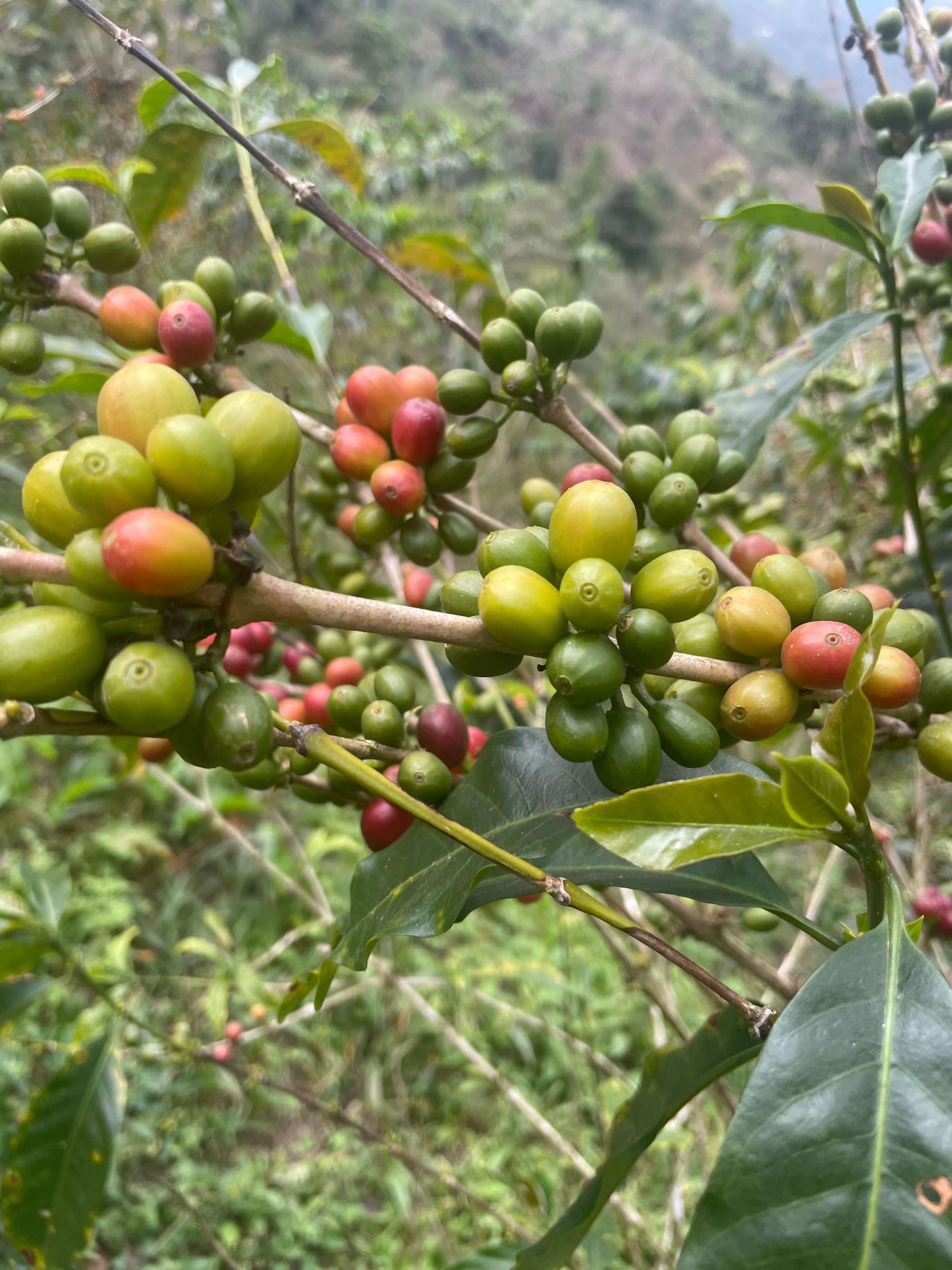
When we drink Peruvian coffee today, we are tasting landscapes shaped by these migrations.
Behind many of the farms now producing exceptional coffees are families who experienced displacement — and eventually, return.
The land, in many cases, never stopped being theirs.
It simply waited.
Joanna Heywood observed these histories from the outside — an outsider who earned proximity over years. The producers in the pages that follow lived them. Judith Avellaneda is one. Her journey from Cutervo to Lima to Spain and back again is not a single story of return — it is several. And when she finally came home, the land was still waiting.
→ Read next: The land waited for Judith Avellaneda