


The first time La Libertad was presented as a coffee region, it happened through a competition. The Liberteña Cup.
Created by Carlos Solís Zapata and Greins Gamboa through Proyecto Otuzco, it brought together producers who had never been evaluated alongside one another, using protocols aligned with the Cup of Excellence.
"No private or public entity had ever organised something like this before."
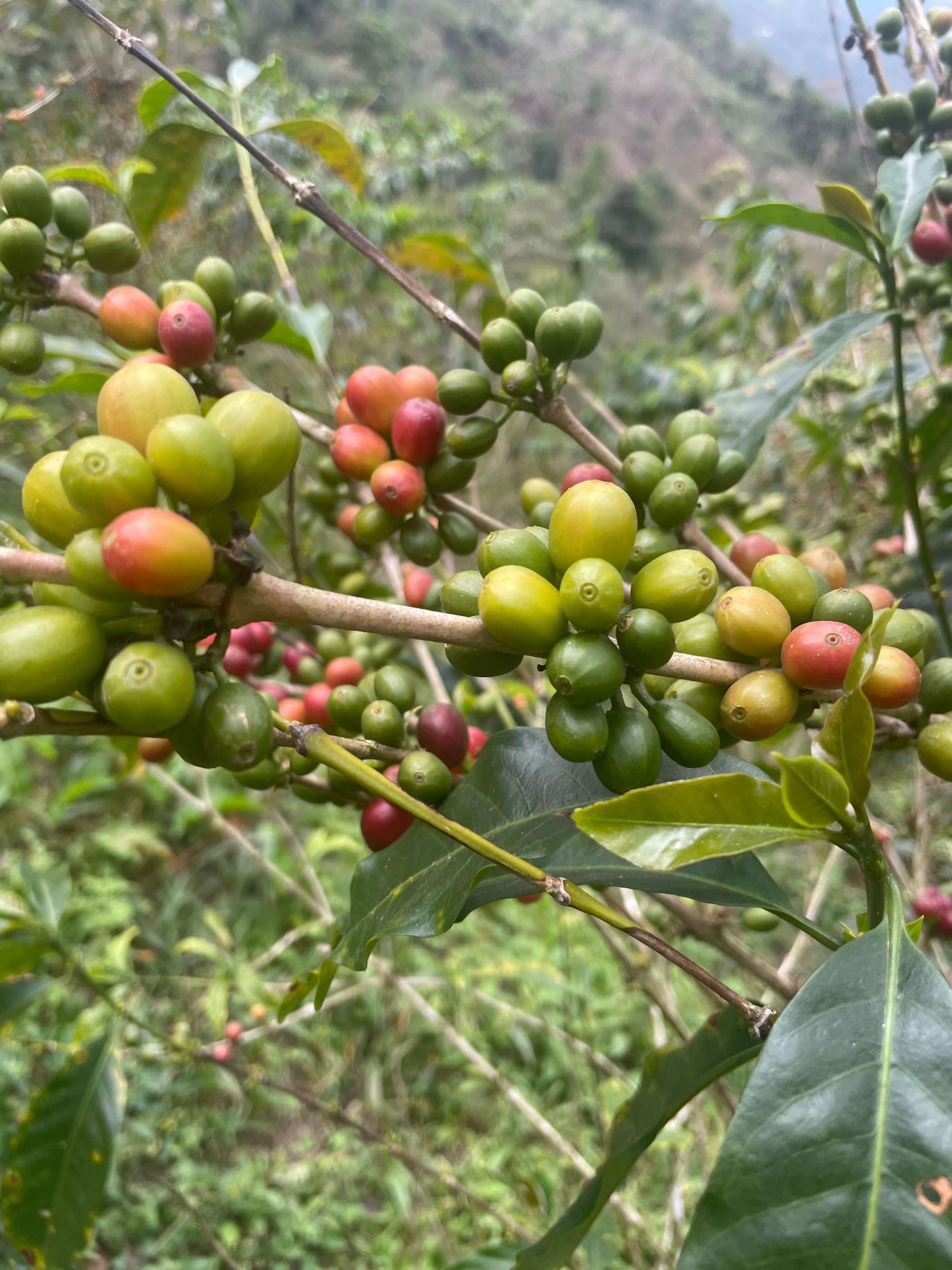
La Libertad is not known for coffee. Within Peru, it is more closely associated with mining, and rarely appears in national coffee narratives. And yet, coffee is grown here.
Across Huaranchal, Usquil, Charat — and further into Cascas, Shirán and Púsac — small farms produce coffee across a wide range of elevations and conditions.
Production has long existed. Recognition has not. Proyecto Otuzco developed by connecting these areas. What began in a few districts expanded into a broader network, linking producers who had previously worked independently.
As that network grew, a pattern became clear: Quality was present — but dispersed. Coffees were produced in isolation, without a shared reference point.
The Liberteña Cup changed that. It created a structure through which coffees could be evaluated together — not as individual lots, but as part of a developing regional profile.

For the first time, La Libertad could be presented as a coherent origin. The results matter — but require context.
Usquil stood out, with the Sánchez and Julca families placing first and third with Catuaí lots scoring 86.25 and 85.5. Cascas followed, with the Saldaña family placing second at 86 with a blend of yellow Caturra and Bourbon.
In more established regions, these would be mid-range scores. Here, they establish a baseline. The impact extends beyond ranking.
Producers have begun adjusting harvesting, designing fermentation and drying processes with greater attention to how decisions translate into the cup. Evaluation is no longer external, it becomes part of production.
This is visible in families like the Ramos García. Working with Proyecto Otuzco since 2019, their processing has evolved incrementally. Honey fermentation, controlled drying, small-lot management — each step refined over time.

As Carlos Solís Zapata puts it: "Since joining the project, they have gone from being a farming family to a coffee-growing family." That distinction matters.
La Libertad remains early in its development. Production is small. Infrastructure is limited. Transport is inconsistent. But for the first time, a coffee from Usquil can be presented as a coffee from Usquil.
"This is how a region becomes visible."
Visibility creates its own pressures. Better coffee requires better infrastructure, stronger cash flow, and the ability to pay producers on time. Which introduces the next constraint: capital.
The Liberteña Cup gave La Libertad's producers something they had never had: a reference point, a regional identity, a baseline to build from. But visibility creates its own pressures. Better coffee requires better infrastructure. Better infrastructure requires capital. And for small producers working without consistent market access or reliable cash flow, capital is exactly what's missing. The Lirio Fund exists to close that gap.
→ Read next: Lirio Fund — The missing middle